
D. INTERNET SERVICE PROVIDERS (ISPs)
An Internet service provider (ISP) is a provider that has a permanent connection to the Internet and offers its customers the opportunity, in return for a subscription fee, to use its infrastructure to connect to the Internet. It also manages related services: email addresses, web hosting, Voice over IP (VoIP), and Internet Protocol Television (IPTV).
1. Role of the ISP
The ISP handles data transfer between the Internet and the user as follows:
· The user sends a request (e.g. to access a website).
· The request is sent to the ISP, which then queries the relevant server via the internet.
· The ISP forwards the response received from the remote server to the user.
The ISP connects to the internet via internet exchange points (IX — Internet Exchange), where it interconnects its network with other operators (peering), or via transit agreements.
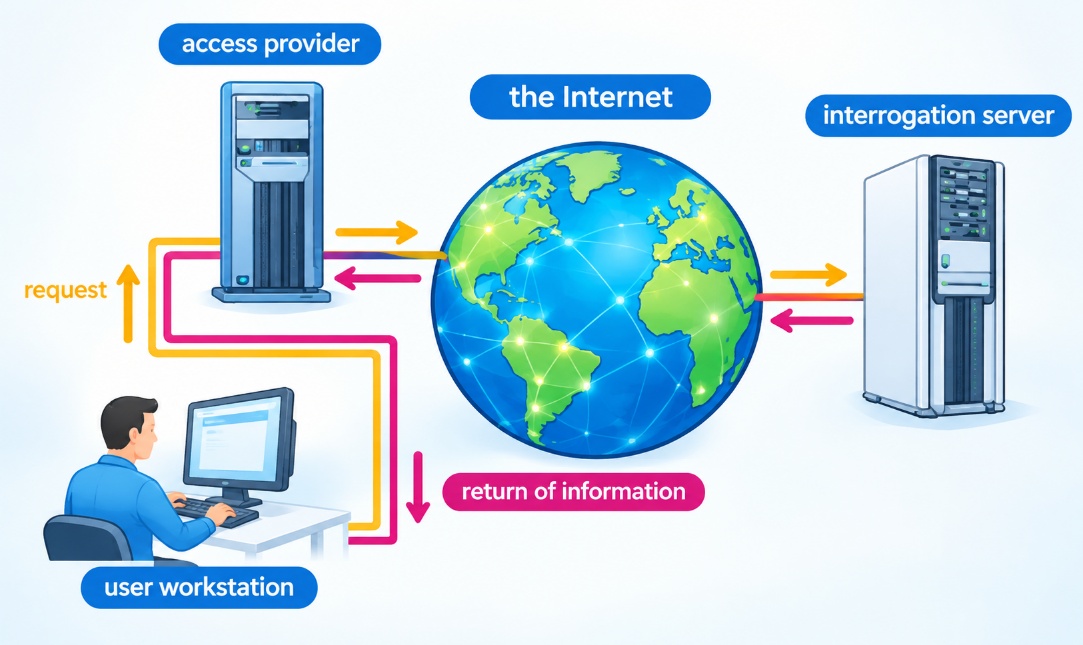
Fig. 7 — Role of the ISP: intermediary between the user and the remote server
2. Choice of the ISP
The criteria for choosing an ISP are:
· Local coverage: urban or rural area, eligibility for FTTH fibre, distance to the local exchange for ADSL, 5G availability.
· Technical performance: guaranteed or ‘up to’ download/upload speeds, latency, uptime (SLA).
· Price plans: installation fees, monthly subscription charges, equipment provided (multi-service box), minimum contract term.
· Services included: unlimited calls, a selection of TV channels, a 4K set-top box, and cloud storage options.
3. Available connection types
|
Technology |
Typical flow rate |
Zones |
Notes |
|
FTTH (fibre) |
500 Mbps – 8 Gbps |
Densely populated and suburban areas |
Recommended solution |
|
VDSL2 (short copper) |
Up to 100 Mbps |
Short routes < 1 km |
Pre-fibre transition |
|
Asymmetric Digital Subscriber Line 2+ |
Up to 24 Mbps |
Rural areas still reliant on copper |
Gradually dying out |
|
Fixed 4G |
30–200 Mbps |
Fibre-optic dead zones |
Box 4G en alternative |
|
Fixed 5G (FWA) |
100 Mbps – 1 Gbps |
5G coverage areas |
Deployment in progress |
|
Satellite LEO (Starlink) |
50–500 Mbps |
Everywhere, including rural and mountainous areas |
Latency 20–40 ms |
|
Coaxial cable (DOCSIS) |
Up to 1 Gbps |
Areas with cable coverage (SFR) |
Rare in France |