
A. HISTORY AND DEVELOPMENT OF THE INTERNET
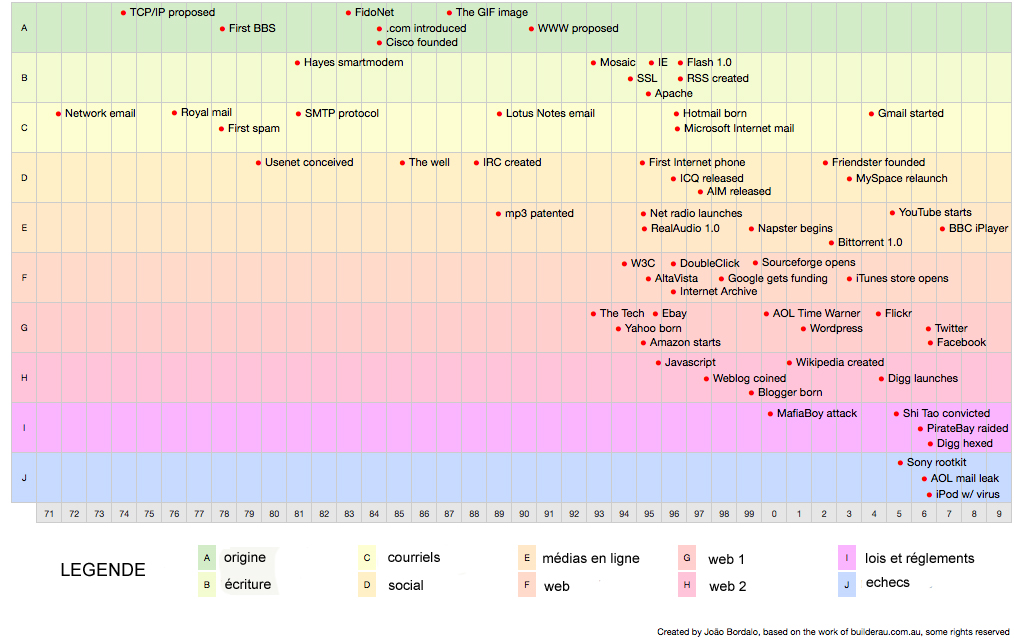
Fig. 2 — Chronologie des événements marquants de l'évolution d'Internet
1. Timeline
1959–1969 — The US military’s ARPA programme (Advanced Research Projects Agency).The military would subsequently use a separate network, MILNET, whilst universities and government agencies would connect to ARPANET.
1973 — The FTP protocol (File Transfer Protocol) was introduced, enabling the transfer of files between remote machines.
1975 — First official version of the TCP/IP protocol (Transmission Control Protocol / Internet Protocol).
1978 — ARPANET moves from the experimental stage to the operational stage. Management is handed over to the DCA (Defense Communications Agency), now known as DISA.
1983 — TCP/IP adopted as a military standard (MIL STD). TCP/IP implemented on UNIX by BBN at the request of DARPA — the origin of TCP/IP’s dominance in the UNIX world.
1986 — Launch of NSFNET (National Science Foundation Network), the backbone network of the Internet in the United States until 1995.
1990 — The end of ARPANET, which was integrated into the NSF network. Creation of the World Wide Web by Tim Berners-Lee at CERN (Geneva).
1991 — Establishment of RENATER (National Telecommunications Network for Technology, Education and Research), a French inter-university network.
1992 — The Internet Society (ISOC) and the IAB (Internet Architecture Board) were established, tasked with standardising Internet protocols.
1993 — The Clinton administration formalised the NII (National Information Infrastructure) — the Information Superhighway policy, initiated by Al Gore.
1994 — The rise of the World Wide Web: widespread adoption of HTML, URLs (Uniform Resource Locator) and HTTP.Foundation of the W3C (World Wide Web Consortium) by Tim Berners-Lee.
1998 — ICANN (Internet Corporation for Assigned Names and Numbers) was established to oversee the administration of domain names.
2005 — The term ‘Web 2.0’ is coined by Tim O’Reilly. Launch of YouTube (acquired by Google). First mashups (Google Maps API).
2009 — The launch of Bitcoin, the first cryptocurrency based on blockchain technology.
2010 — The emergence of HTML5, which transforms web pages into full-fledged applications and turns the browser into a universal software platform.
2014 — The number of websites has surpassed one billion.
2018 — The GDPR (General Data Protection Regulation) came into force across Europe.
2019 — More than 4 billion internet users worldwide.
2023+ — Boom in generative AI (ChatGPT, Gemini, Claude). Widespread adoption of cloud computing, edge computing and 5G. The internet has over 5 billion users.
2. Growth in the number of users
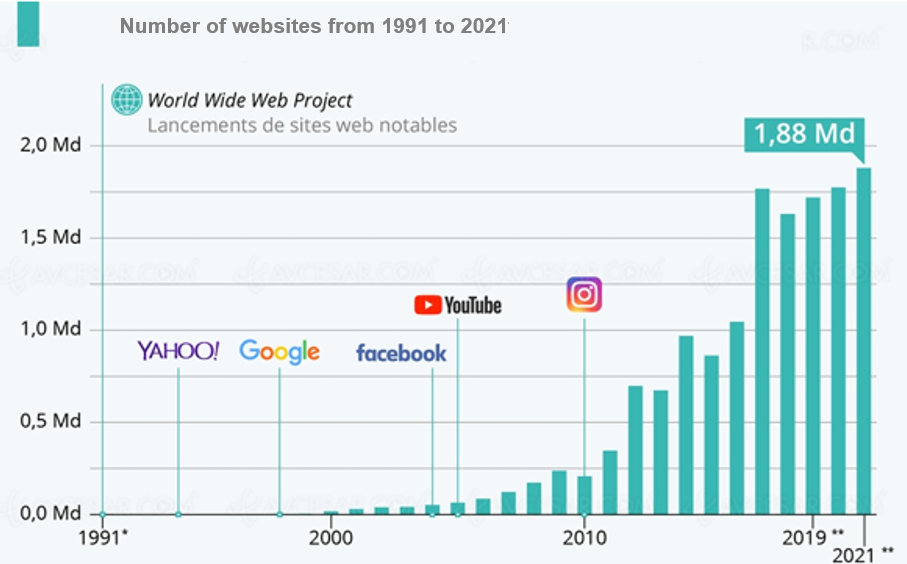
Fig. 4 — Growth in the number of Internet users (1984–2019) – Source Internet Live Stats
|
Year |
Users approx. |
|
1984 |
~1 000 |
|
1987 |
~28 000 |
|
1990 |
~130 000 |
|
1992 |
~1 000 000 |
|
2009 |
~1 milliard |
|
2011 |
~2 milliards |
|
2019 |
>4 milliards |
|
2025 |
>5,5 milliards |