
E. MULTIPLEXING
One of the key advantages of data communications is the ability to establish multiple simultaneous connections over the same physical medium. This technique is known as multiplexing. It enables the optimal use of available bandwidth, which is crucial for costly long-distance links.
There are two main types of multiplexing:
1. Time Division Multiplexing (TDM)
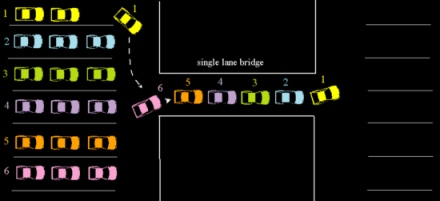
Fig. 20 — TDM multiplexing: each channel occupies a fixed time slot
a) Conventional CT (synchronous)
Synchronous TDM (STDM) divides the available bandwidth into a fixed number of time slots (IT — Time Slots). A time slot is allocated to each channel, which can use it exclusively. A synchronisation time slot is added so that the receiver can identify the start of the frame. If a channel has no data to transmit, its time slot remains empty (wasted bandwidth). This is the principle used in E1/T1 networks (30 or 24 channels of 64 kbps) and SDH/SONET.
b) Statistical TDM (asynchronous — STDM)
Statistical TDM (ATDM) allocates time slots only to channels that have data to transmit. As not all units wish to communicate at the same time, the available bandwidth is shared dynamically. Data is buffered and then grouped into packets with a header containing the destination address. If only one channel is transmitting, it can use all the bandwidth.
Major advantage: better utilisation of available bandwidth. Disadvantage: when the buffers are full, flow control rules halt transmission. The variable delay (jitter) introduced by store-and-forward transmission makes this method unsuitable for isochronous traffic (voice, real-time video).
2. Frequency/Wavelength Division Multiplexing
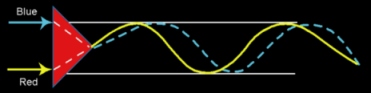
Fig. 19 — WDM multiplexing: multiple wavelengths over a single fibre
WDM (Wavelength Division Multiplexing) is based on the principle of simultaneously transmitting multiple digital signal streams, each at a distinct wavelength, through the same optical fibre. Each wavelength constitutes an independent optical channel; the signals do not interfere with one another.
WDM (2–8 channels): first generation, wide channel spacing (20 nm). 2 to 8 optical channels.
CWDM (Coarse WDM, 18 channels): 20 nm channel spacing, wavelength range 1,270 to 1,610 nm. Uncooled transmitters, low cost. Used in metropolitan networks and long-distance LANs.
DWDM (Dense WDM): very narrow channel spacing (0.8 nm = 100 GHz, or even 0.4 nm = 50 GHz). 40, 80 or even 160 optical channels on the same fibre. Total bandwidth: up to 3,200 Gbps (80 channels × 40 Gbps) and beyond with 100/400 Gbps channels. This is the transport technology used in all operator backbones and submarine cables.
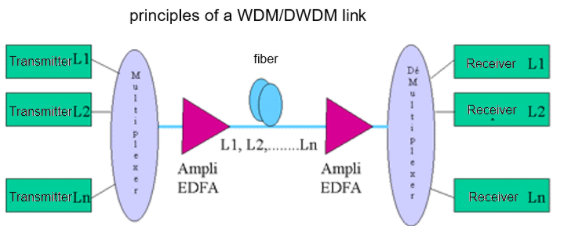
Fig. 21 — DWDM architecture: multiplexer/demultiplexer and EDFA amplifiers
⚡ DWDM and EDFA amplifiers
In long-haul DWDM networks, EDFA (Erbium-Doped Fibre Amplifier) amplifiers regenerate all optical channels simultaneously without any optical-to-electrical-to-optical conversion. Modern coherent DWDM systems (100G, 400G, 800G) use advanced modulation formats (DP-QPSK, DP-16QAM) and DSP algorithms to compensate for chromatic dispersion and polarisation mode dispersion.
3. OFDM — Orthogonal Frequency Division Multiplexing
OFDM (Orthogonal Frequency Division Multiplexing) is a multi-carrier modulation technique that divides the bandwidth into a large number of narrow sub-channels (sub-carriers) transmitted in parallel. The sub-carriers are orthogonal to one another, thereby eliminating inter-carrier interference.
OFDM is the modulation technique used in: ADSL/VDSL2 (DMT — Discrete Multi-Tone, an OFDM variant), Wi-Fi (802.11a/g/n/ac/ax), LTE/4G, 5G NR (for sub-6 GHz bands), DVB-T/T2 (digital terrestrial television).