
I. SDH/SONET — SYNCHRONOUS DIGITAL HIERARCHY
SDH is the European version (Synchronous Digital Hierarchy), whilst SONET is the American version (Synchronous Optical Networks). SDH has been standardised by the ITU-T and operates at layers 1 and 2 of the OSI model. It is the physical transport technology used in telecoms operators’ optical networks.
1. PDH vs SDH
PDH (Plesiochronous Digital Hierarchy): the standard hierarchy that has evolved primarily for telephony. PDH can multiplex and transport lower-bit-rate elements by transmitting them at higher bit rates through the insertion of padding bits. The disadvantage is that the signal must be completely demultiplexed to access a lower-bit-rate component.
SDH: offers significant advantages over PDH: flexibility in extracting or directly inserting a constituent signal, ease of operation and maintenance, the potential for upgrading to higher data rates, easier interconnection of systems thanks to standardised optical interfaces, and network architectures that provide protection against line faults.
2. SDH/SONET Hierarchy
|
SDH |
SONET |
Flow rate |
|
STM-1 |
OC-3 |
one hundred and fifty-five megabits per second |
|
STM-4 |
OC-12 |
six hundred and twenty-two megabits per second |
|
Synchronous Transfer Mode 16 |
OC-48 |
2.5 Gbps |
|
Super Nintendo |
Ocean Current 192 |
10 Gbps |
|
Synchronous Transfer Mode 128 |
Ocean Current 384 |
20 Gbps |
|
Small-scale, high-speed, high-density memory |
Ocean Current 768 |
40 Gbps |
3. Structure of an SDH frame
The basic frame is called STM-1 (Synchronous Transport Module, Level 1). This frame has a total length of 2,430 bytes (9 × 270 bytes), a transmission rate of 125 µs (8,000 frames/s), resulting in 155.52 Mbps. Of the 270 bytes per row, 9 bytes are reserved for management and addressing (SOH/PTR) and 261 bytes constitute the payload.
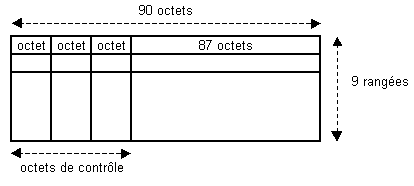
Fig. 9 — Structure of an SDH STM-1 frame (9 rows × 270 bytes)
The signals to be transmitted are stored in virtual containers (VC: Virtual Container) of various types. The VC and the pointer together form an AU (Administrative Unit).
4. Multiplexing SDH
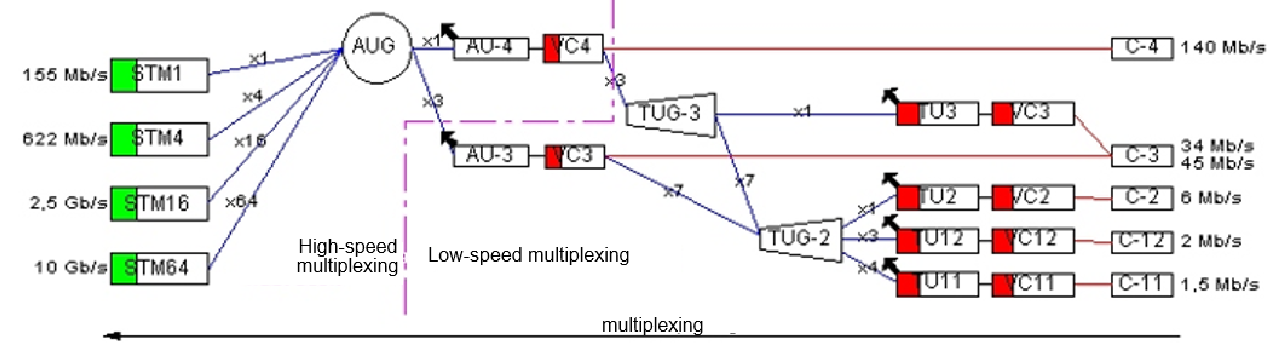

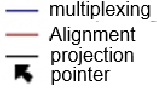
Fig. 10 — Structure de multiplexage SDH (conteneurs virtuels, AUG, STM)
⚡ SDH/SONET and modern networks
SDH/SONET remains the backbone of operators’ optical transport networks. Modern networks use OTN (Optical Transport Network, ITU-T G.709), which is the evolution of SDH for very high data rates (100 Gbps, 400 Gbps, 1 Tbps), with improved monitoring and protection mechanisms. OTN can carry SDH, Ethernet and other encapsulated traffic.